Lengthy read on the stadium and finances
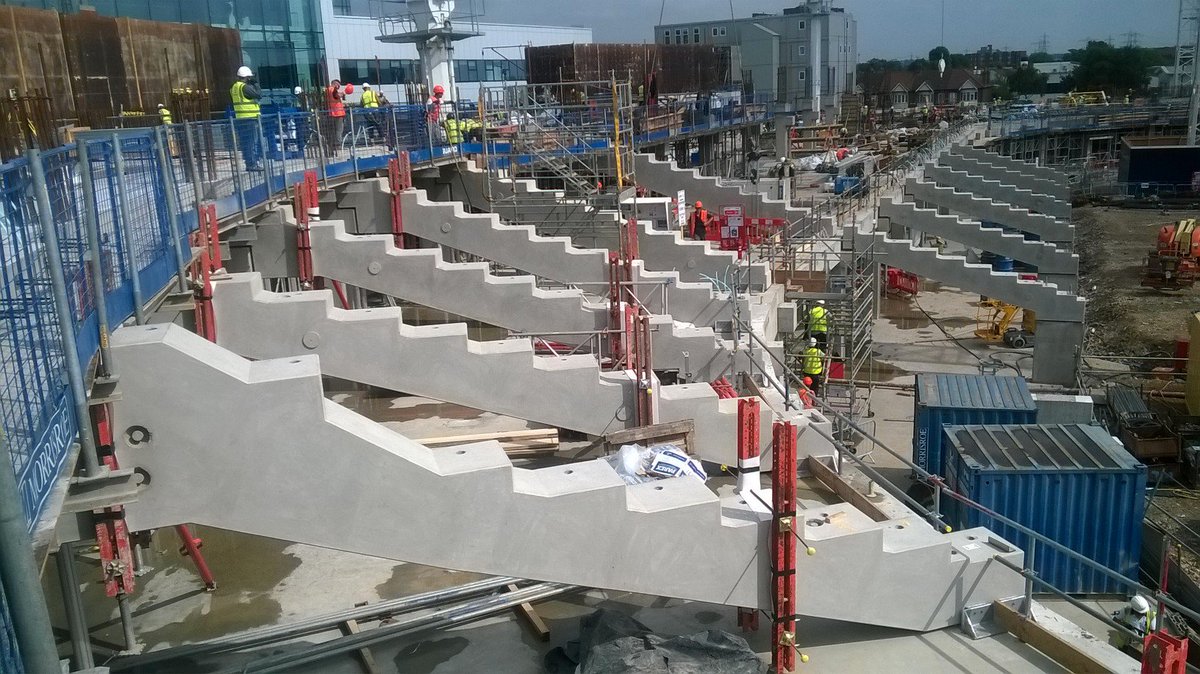
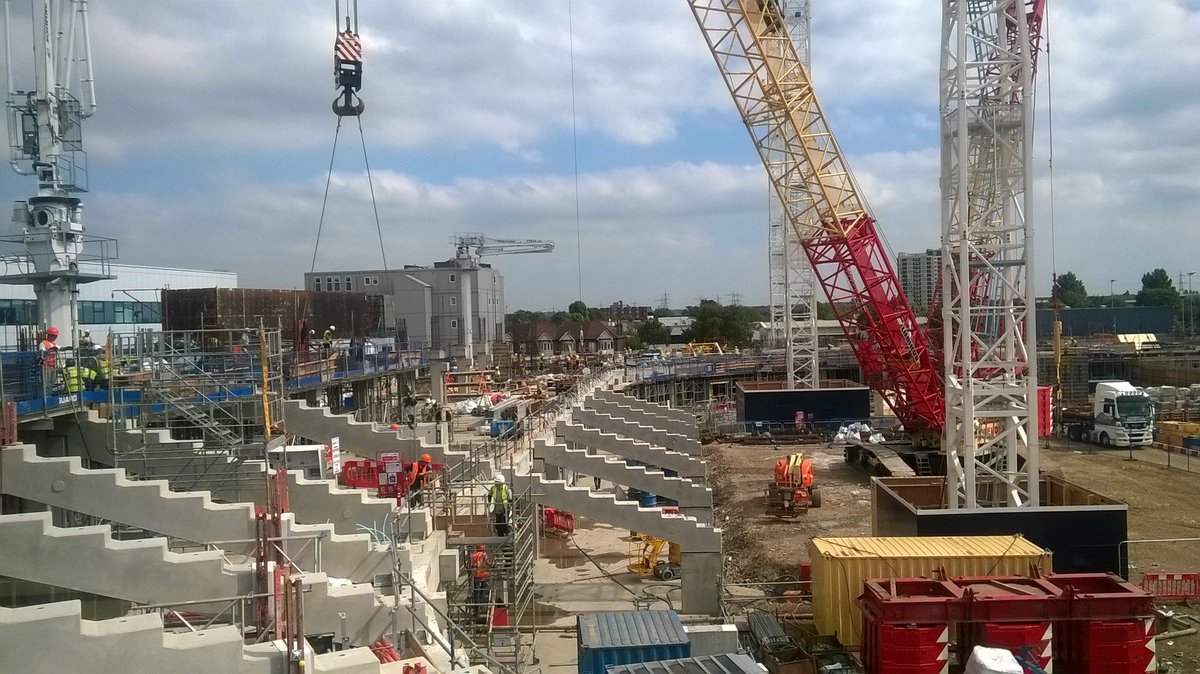
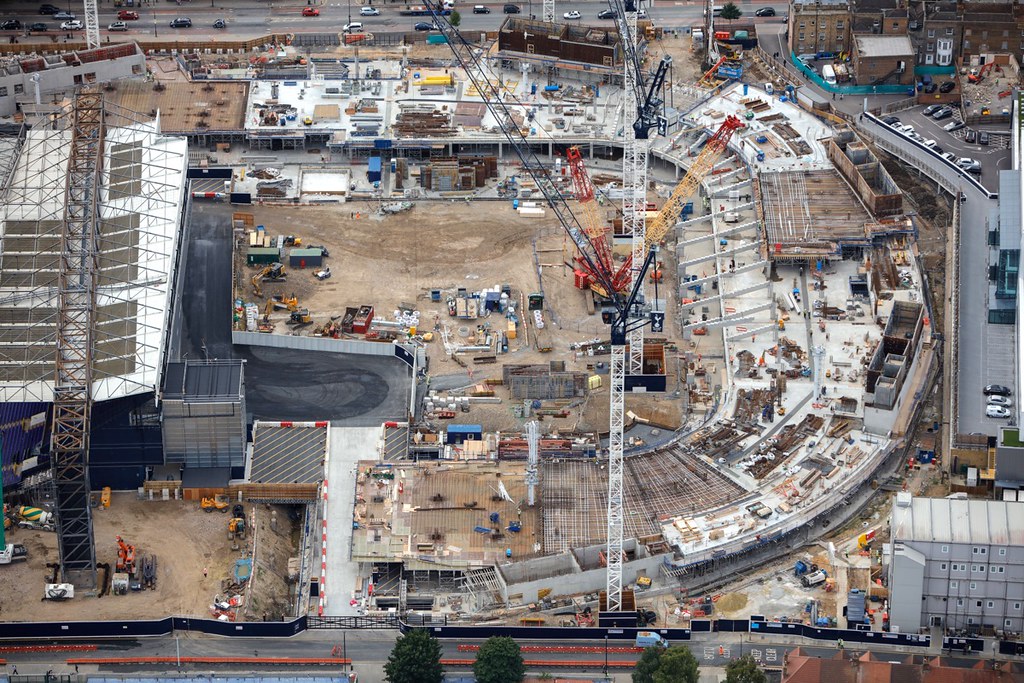
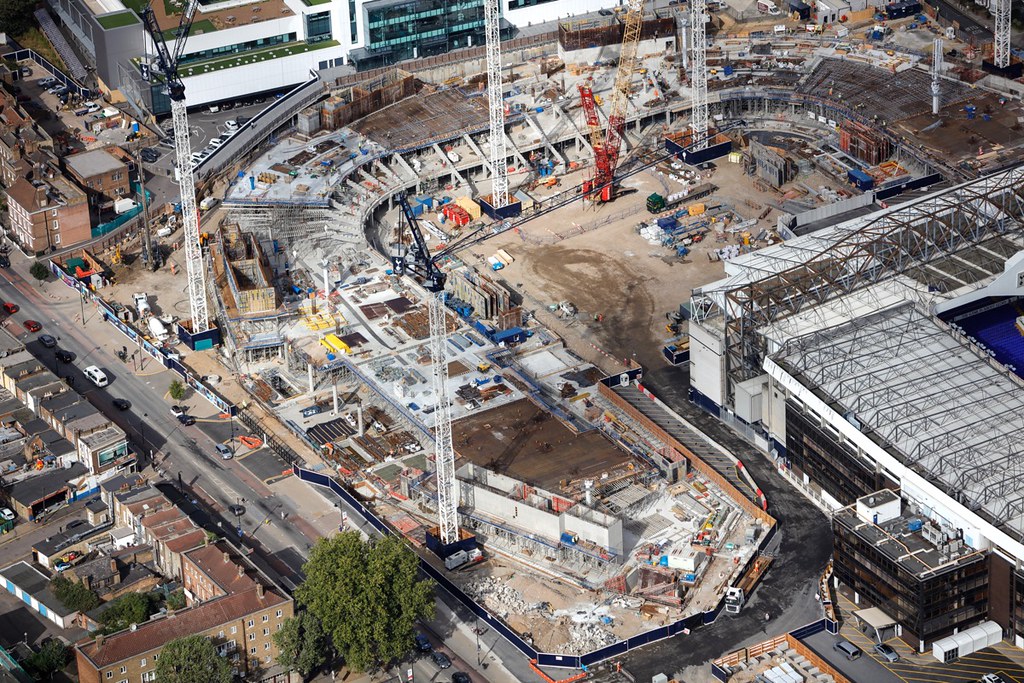
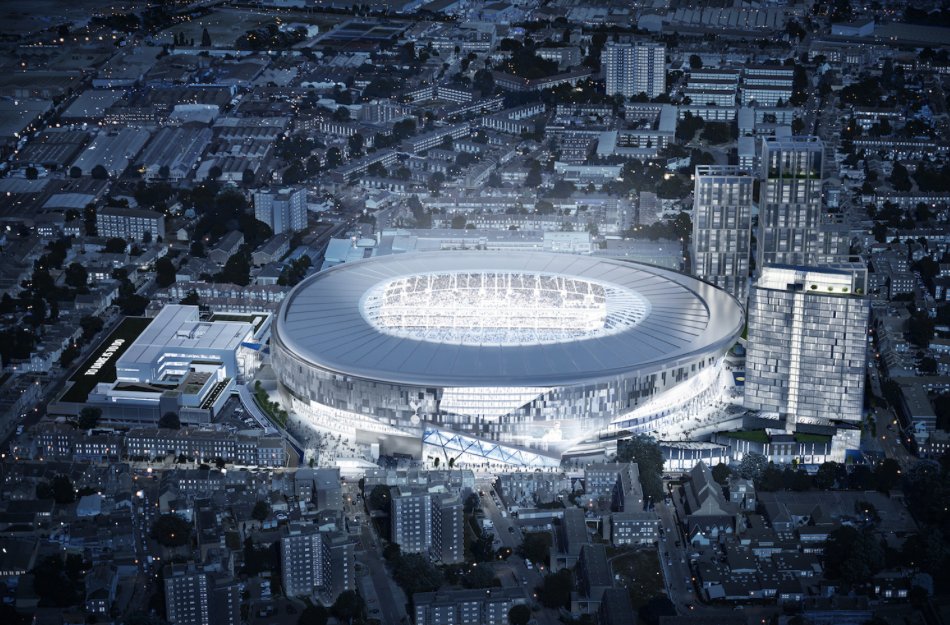
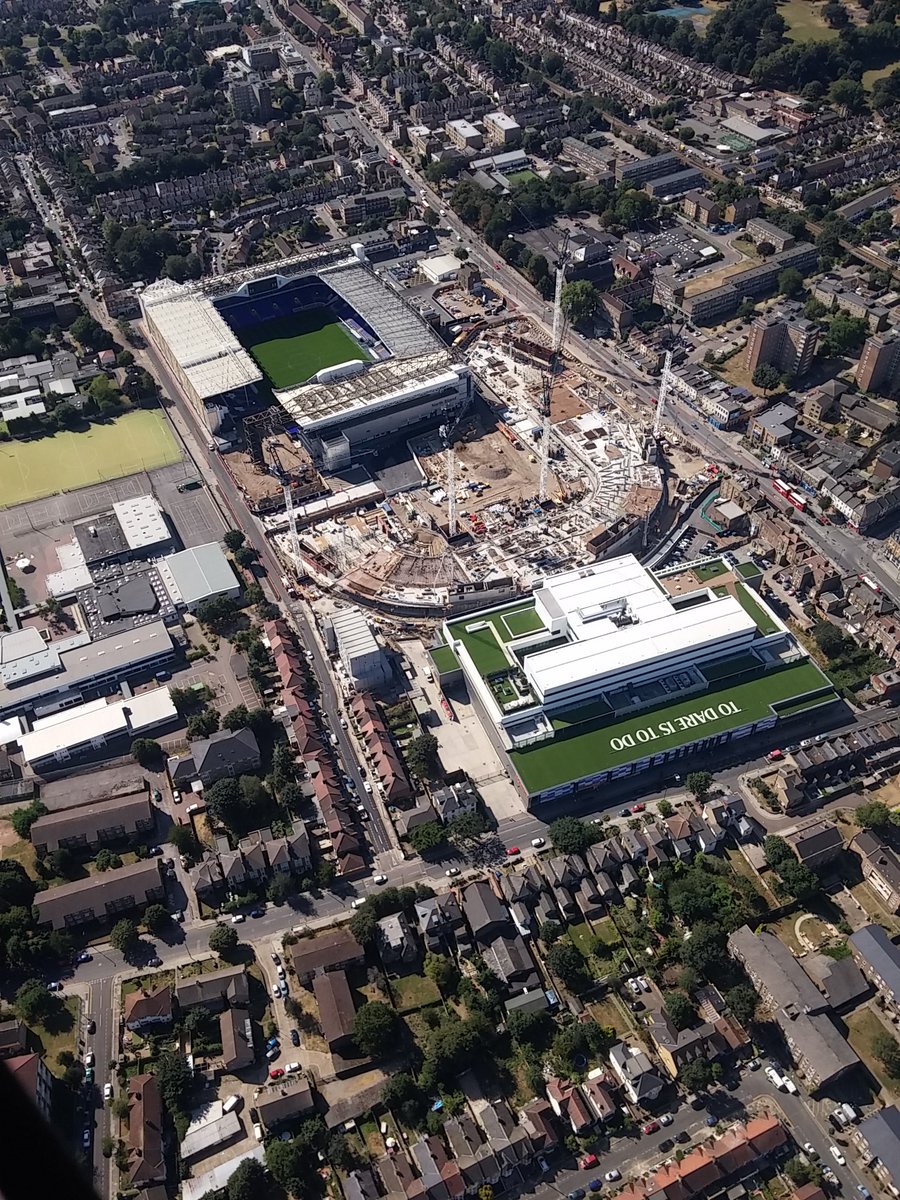
https://thespursreport.wordpress.co...itive-through-the-stadium-construction-phase/ The balancing act: Can Spurs find a way to remain competitive through the stadium construction phase? 4 Replies If it didn’t already feel real, the sight of the new stadium starting to rise up from the ground illustrates that a new era is finally dawning on Spurs. The next five years promise to be one of the most exciting, and most risky, periods in the club’s history.
Spurs are borrowing at least £350 million from banks, plus securitising future commercial and matchday revenues, in order to fund the stadium project and associated development.
The debt load will surpass what Arsenal took on to build the Emirates a decade ago, and will only be topped by Manchester United, who last year paid around £35 million in financing and £15 million in dividend payments for the privilege of being owned by the Glazer family.
Having spent a decade wading through the planning process and acquiring the land, now the club has the challenge of delivering a 61,000-seater stadium in a densely populated part of London on a tight timeframe, and to budget.
Things appear to be on track at this early stage, but an extraordinarily challenging few years await. The reward is clear though — New White Hart Lane promises to be a world-class stadium, and a true sporting cathedral that is everything the dreary Olympic Stadium will never be.
I have previously written about the stadium financing issue
in great detail. In this post, I am going to take a look at the broader state of the club’s finances, and the challenges that lie ahead through the stadium construction phase.
Moving away from pragmatic player trading A look through the recent financial history of Spurs reveals a number of distinct eras, layered on top of each other like sedimentary rock.
From 2001 to 2007, you have the “Early ENIC” years, in which Daniel Levy inherited the mess from Alan Sugar and piled on more mess as he tried to get to grips with the intricacies of Premier League chairmanship.
From around 2007, the “Wheeler Dealer” era truly began. This was a period of frenzied transfer activity that gradually pushed Spurs from mid-table to the fringes of Champions League contention, but without any sense of stability or sustainability beyond the confidence that more bargains would be found, and more mega fees extracted. This era came to a shuddering halt with the failure of the Bale money splurge, and the realisation that Spurs were never going to be able to compete with the moneybags elite when needing to sell as well as buy.
Since 2014, a new era has emerged, with a more prudent approach to player trading and a greater focus on cost controls. How much this is connected to the stadium funding, or the arrival of Mauricio Pochettino, is unclear. Certainly, you suspect Andre Villas-Boas was supposed to be ambitious young manager to lead Spurs through the tricky stadium construction phase, but there was
a problem with a beanie hat and not everything works out.
Pochettino has
made a virtue out of having a young, hungry and therefore relatively cheap squad, and the narrow band into which most of the player salaries reportedly fall is seen as a contributing factor to squad unity. Likewise, the club has had the incentive to ensure its accounts are glistening as it struck agreements on financing — a little money saved now could mean a lower rate of interest on the £350 million stadium loan.
Tottenham has been a consistently profitable club in the past decade, but has been reliant on player trading (profit on disposal of intangible assets, as it is known) to achieve this, as the following chart shows:
In the past decade, the club is £152 million in profit. However, in that time, accounting profit on player trading is £295 million — without player trading, the club would have theoretically lost £143 million. Of course it’s not nearly that simple, but it illustrates the degree that Spurs have needed to sell in order to buy.
When Levy referred to “pragmatic player trading” in the club’s
rather panicky statement to reassure disgruntled fans in September 2015, it didn’t sound right to me due to the suggestion of a continuation of the “buy low, sell high” era that had already started to pass. “Prudent player trading” would have been a better phrase — no need to sell players the manager wants to keep, but limits on what can be spent and a more cautious approach to acquisitions.
What the stadium financing phase needs is as great a degree of stability as is possible in the anarchic environment of Premier League football. Player trading is the biggest uncertainty of them all in football’s financial landscape. Now that Pochettino has cleared out the flotsam inherited from the Franco Baldini era, fans can expect the “churn” to reduce in transfer windows to come.
Cost controls in action If you read
any analysis of THFC finances from recent years, you’ll see some variant on the following phrase: “Daniel Levy runs a tight ship”.
There are many stories of these cost controls in action — my personal favourite was Mido being told
to run across the tarmac to ensure he got a seat with extra legroom on a budget airline flight to London after being bought from Roma.
For a couple of months a year, this gets frustrating. The club’s approach to transfers is akin to dental surgery — deals are done painfully and slowly. Contract negotiations seem to drag on endlessly, key targets are missed, players leaving the club are left in limbo while the market is scoured for someone desperate enough to pay the premium.
Part of this, undoubtedly, is personality driven, and there appears a genuine relish in tough negotiations and brinkmanship. But part of this is necessity — with matchday revenues at their limit, and the club unable for various reasons to match the commercial growth of the richer clubs, it has become increasingly important to find value in the transfer market and control player costs with the stadium financing ahead.
I want to illustrate “where the money goes” at Spurs, and demonstrate what these cost controls actually look like.
.
I’ve gathered data from the past 10 years for revenue and the two major outgoings, namely wages and transfer spend.
(For transfer spend I will use the figure for amortisation. Amortisation is an accounting method whereby the cost of buying players is spread over the lengths of their contracts. There’s an explanation at the bottom of
this piece, but essentially amortisation is an annual figure that shows how much the club is actually spending on transfers. The advantage of this is that, while most transfer fees are undisclosed, the amortisation figure is listed in the accounts.)
Here is a chart:
This gives you a picture of how revenue and wages are rising, but transfer spending has actually been quite flat.
However, if you combine wages and amortisation, something interesting happens:
As you can see, wages plus amortisation tracks revenue remarkably closely from 2007-2014, to the point that it is almost a mirror. It is only in 2010 (financial year) when the gap becomes close. You can see the balance-sheet management in play to ensure spending remained at the desired level.
Why am I so confidently proclaiming a new financial era? Look at 2014. For the first time, revenue starts to diverge, and there is every indication that the divergence will grow starker over the next two financial years.
In the next accounts, the following senior players will come off the books, or be added:
OUT: Paulinho, Holtby, Capoue, Kaboul, Stambouli, Chirches, Soldado, Lennon, Adebayor.
IN: Wimmer, Trippier, N’Jie, Alderweireld, Son,
While there have also been a number of new contracts, and there are hints some of Adebayor’s contract pay-off may have been factored into the 2015 accounts, in all likelihood the wage bill is going to be level or even lower in the 2016 accounts. Meanwhile, the strong league performance means TV money will increase. In the 2017 accounts, we’ll have both the new Premier League TV deal kicking in, and Champions League revenue, to counterbalance a series of new contracts and the signings made in the past window.
My prediction is that revenue and first-team spending will continue to diverge in the next two years. This puts Spurs in opposition to most other Premier League clubs, which are frantically offloading the new TV money on transfer fees and wages as fast as it is pouring in.
As it stands, here are the combined wages and amortisation for the four clubs arguably “closest” to Spurs financially (United are on a different planet, and Chelsea and City are billionaire playthings, so a comparison isn’t worthwhile):
Arsenal — £244.1m
Liverpool — £227m
Tottenham — £139.4m
Everton — £97m
West Ham — £94.3m
In previous years, Spurs have been all alone in “sixth” place in spending on wages (among several other indicators of club “size”) — we will start to see other clubs narrowing the gap. Some may interpret this as a lack of ambition, but ultimately Spurs have a £750 million stadium scheme to fund, which seems pretty ambitious to me.
The growing gap between revenue and first-team spending means more funds that can be rolled into the stadium project. Spurs appear to be positioning themselves to absorb the spike in financing costs that is to come.
In short, since 2014 Spurs have been shifting to a more sustainable model that relies less on big transfer fees to balance the books. The emergence of home-grown stars like Harry Kane, smart acquisitions like Dele Alli and Eric Dier, and the strong management of Mauricio Pochettino have turbocharged this shift. Sometimes you need a bit of luck.
Learning from Arsenal Over the next five years, the period of peak financing, Spurs need to strike a balance between funding stadium construction, and remaining competitive on the pitch.
Over the next two seasons in particular, the financial benefits Spurs can accrue from being competitive (Champions League money, greater share of British TV money, improved receipts from Wembley),relative to the amount of money that can be saved, justify continued investment in the playing squad. A competitive and appealing Spurs team will greatly help the club sell the increased number of tickets and long-term hospitality packages that is the rationale underpinning the whole project.
Levy has repeatedly stated that there is no need to sell players to fund the stadium, including at
the last board-to-board meeting with the Tottenham Hotspur Supporters’ Trust. This isn’t just a statement of confidence in the funding package for the stadium, but also recognition of the need to ensure Spurs field a strong team on opening day of the 2018/19 season.
However, there is a difference between not needing to sell players, and having limits on what can be spent to secure new ones. The extent to which Spurs can compete for new players over the next five years will depend on how much Spurs will have to spend to finance construction. Spurs will be taking on huge debt — at least £350 million — but the key will be controlling the amount that is spent each year on interest payments and repayment of principal.
(Why do I keep saying five years?
As previously reported, the £350 million loan will be a five-year loan, which will then be refinanced — per the Viability Report for the project submitted during the planning process. Until I hear otherwise, I will assume the basic funding plan is the same.)
As the only other club to have built and financed a comparable project, the best example for what lies ahead is Arsenal. I don’t want to go into too much detail as the comparison isn’t perfect, but there are a few points worth making.
Arsenal, notoriously,
felt the squeeze during construction, creating a need for parsimony that some fans argue Arsene Wenger has never really shaken off. Spurs have the great advantage of learning from Arsenal’s experience. From my understanding of what I have read, Arsenal ploughed ahead without all the required funding in place, which made it more expensive and at one stage forced construction to stop. Spurs can’t afford such a delay given the tight time schedule imposed by the need to play away from White Hart Lane.
I’ve attempted to gather data for the finance costs paid out by Arsenal, to demonstrate, not so much the amounts, as the “profile” — how finance costs will peak and then reduce and flatten to a tidy annual sum. This is extremely hard — Arsenal have refinanced their debt load on several occasions, making it hard to track. The chart below gives the club’s stated figures for interest charges in the period, and debt payments due in the coming year (repayment of principal).
Arsenal raised debt for both the Ashburton Grove stadium project, and the redevelopment of Highbury — likewise, Spurs will be funding property development (on the “southern development land” on the stadium site and at 500 White Hart Lane) as well as stadium construction. I can’t be sure all the debt payments relate to stadium/property development, so take the figures with a pinch of salt. But, it is a consistent measure.
The 2007 figure isn’t right, as I can’t find the “repayment of principal” number due to refinancing, frustratingly. But for the first four years, you can see how total financing costs were between £35m and £45m — quite a burden. From 2008, things levelled out, and Arsenal continues to spend around £19m a year on its Emirates “mortgage”.
Spurs can expect a similar profile to this. For five years, repayments and interest will be high, but then the bank loan will be refinanced into a long-term debt package at a lower rate of interest. Arsenal’s debt is split about 80-20 between fixed-rate and floating-rate bonds, at 5.8 percent and 6.6 percent interest respectively. More than any aspect of this whole project, I expect Daniel Levy to get the best possible terms on this sort of financial jiggery-pokery — he has years of experience.
We won’t know how much Spurs are spending on financing costs (I could ask, but I will get a polite note stating the commercial sensitivity of the topic, I guarantee) until the accounts covering the financing period are published — we’ll have to wait for the 2016 accounts, published in April/May of 2017. Any attempt to put a figure on it on my part would be conjecture. But it will be substantial.
One final point of comparison with Arsenal is the shift in the broader financial environment of a Premier League football club in the past decade. Here are the comparative revenues of Arsenal at the peak of Emirates financing, and Spurs last year:
As you can see, Tottenham’s revenue is nearly £60 million higher, due to more commercial income and TV money (and that number will spike in future accounts with the new TV deal).
On the one hand, Spurs are taking on a bigger finance package — £350m versus £260m. On the other hand, Spurs are doing it from a stronger financial position — £196m revenue versus £137m.
The ability of Spurs to control financing costs and maximise revenues during the construction phase will ultimately determine the amount that is ringfenced to be spent on transfers and wages.
Capital expenditure What shouldn’t be forgotten amid the talk of the massive new financial burden is that, for years now, Spurs have been investing heavily in both the stadium project and the training centre.
In the meeting with the THST in May this year, Daniel Levy
stated that £150 million had been invested in the stadium project to date. Per the last accounts, the “cumulative” spend on the stadium (professional fees and “enabling works”) was stated to be £59 million, up from £40.9 million in the previous year. On top of that £59 million are property acquisitions, professional fees/other costs for the previous design that will have been written off, and construction costs in the six-week period between when Spurs gained the final green light and the board-to-board meeting.
As for the training centre, upon opening, it was capitalised at £27.5 million — in line with the £30 million price tag that is generally put about for the wonderful facility.
This £177.5 million capital expenditure has taken place over the past nine financial years (prior to 07/08 there was none). The average spend is about £20m per year, although of course it is far from a straight line. This investment has been funded by a combination of equity contributions, bank loans and club profits.
As an aside, I was curious to see how much money has been put in by ENIC to fund this sort of expenditure in the past decade, and how much has come from loans/profits.
This stuff gets hard to track as the club accounts are pretty complex. But from what I can make of it, in 2014 there was a £40m injection, while in 2010 there was a £15m injection plus a further £18.4m “investment in group companies”. This refers to the many subsidiaries that are mostly focused on property, so it would be reasonable to suggest this was for property purchases.
From my chats with people who know about this stuff (OK, that’ll be
@ztranche),this equity contribution has been in the form of loans converted into preference shares.
The combined equity contribution is £73.4m, meaning the rest — £104 million or so — has been funded by loans and from profits. This is equity contribution is fairly modest, given the size of Joe Lewis’s
Tavistock Group portfolio and the way the value of the club is going to soar once the stadium is complete. I’d compare this level of investment to adding a conservatory to your house to increase the value, rather than being a sugar daddy and sticking a helipad on the roof. But the money was found, and the investment now will help the club in years to come (and help “Uncle Joe” cash in, if and when he sells).
Overall, while not on the level of the stadium financing costs once the £350m loan kicks in, this £177.5m is not an inconsiderable amount of capital investment in the period. It will have given Spurs experience in managing its balance sheet to ensure not all the TV money is pissed away on agents and transfer fees. There is an adjustment coming, but won’t be like Spurs are accelerating from 0 to 60mph — we’ve already been cruising along at 30mph for a while now.
Final thought The next five years is about finding the right balance between funding the stadium and funding a competitive team. It’ll be hugely challenging, and even if Spurs get it “right”, events out of the club’s control — luck, relative performance of others, macroeconomy, you name it — may mean it looks like the club got it “wrong”.
Underinvestment in the playing squad could have a negative impact on the viability of the stadium project, just as overinvestment could. It is safe to assume Spurs will be on the cautious side of this spectrum —
the unofficial target of a 45 percent wages-turnover ratio hints as much.
But, building a new stadium doesn’t mean the club must put away the chequebook for a few years — in fact, the club must not. A drift back towards mid-table would be counterproductive in terms of both lost revenues, and the potential loss of Champions League calibre players that would harm the effort to sell tickets and hospitality packages in the new stadium when it opens.
I don’t want to see the club hide behind the stadium project as an excuse for not sufficiently strengthening the playing squad. The fact that Spurs were prepared to overpay on deadline day to secure a player like Moussa Sissoko shows the money is there, and the club is prepared to spend it. Likewise, continued investment in Hotspur Way through the construction of player accommodation shows the bigger picture isn’t being ignored, and the club is not being stretched beyond its limits by the stadium scheme.
The data I have gathered shows, in my opinion, that Spurs are well positioned for the huge leap that is now being taken. Years of pragmatism in the transfer market, and stringent cost controls, mean Spurs are as well prepared as they could be for the jump in stadium-related spending that is coming.
The spike in Premier League money, improvements in performance under Mauricio Pochettino and emergence of a clutch of homegrown talents are perfectly timed and give Spurs a little more leeway, arguably, than Arsenal had when building the Emirates. Of course, the Premier League TV deal has an inflationary impact on transfers and wages, which makes finding value harder.
Investing big bucks during boom years on capital projects such as training centres and stadium upgrades is exactly what a football club should be doing from a business perspective. Personally, I am very happy with what is being attempted and fully supportive. Some readers will disagree — that is your right.
For Daniel Levy, the new stadium is his vision and the defining project of his chairmanship. He has skin in the game — as the owner of a significant portion of the club,
his net worth will soar if the stadium project is completed successfully.
The incentives for him to get things right are clear. But finding the right balance will be hugely challenging, and involve much guesswork. It’s going to get interesting, folks.